18 dezembro 2020
What you need to know about the coronavirus pandemic on 18 December
COVID-19: What you need to know about the coronavirus pandemic on 18 December: Top stories: French PM Macron tests positive; EU states to start COVID-19 vaccinations from 27 December; Moderna vaccine set for US approval.
The Decimal Point that Blew Up the World
The Decimal Point that Blew Up the World: What was the basis of panic that led the lights to darken on
civilization? The most important date here might be March 11, 2020.
That’s when Congress itself flew into an unwarranted panic, and
acquiesced to a lockdown at the urging of the “experts.” State governors
followed one by one, with few exceptions, and the rest of the world
joined the lockdown frenzy.
In February, people were aching to know the answer to the following. Would this “novel virus” have familiar patterns we associate with the flu, seasonal colds, and other predictable and manageable pathogens? Or would this be something entirely different, unprecedented in our lifetimes, terrifying, and universally deadly?
Crucial in this stage was public-health messaging. In previous pandemics from post-1918 throughout the 20th century, the central messaging was to stay calm, go to the doctor if you feel sick, avoid deliberately infecting others, and otherwise trust the systems in place and keep society functioning. This was long considered responsible public-health messaging, and this was pretty much where we stood throughout most of January and February, when publications regardless of their political outlook maintained sobriety and rationality.
Something dramatically changed this time.
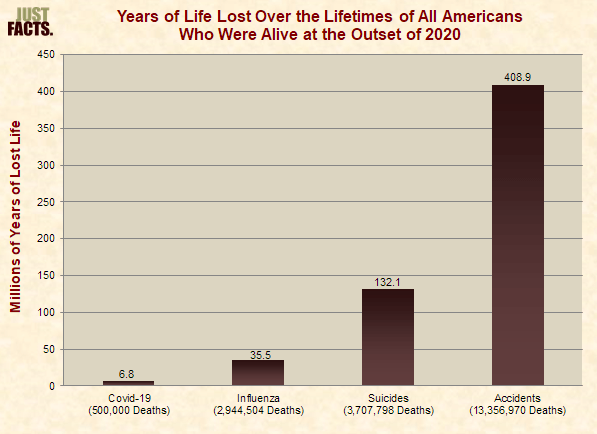
The Covid-19 Data is a ‘Travesty’
The Covid-19 Data is a ‘Travesty’: How the UK and US Covid Death Data is Inflated
Although people have tragically died from Covid-19, the way the Covid-19 death data is recorded in many countries around the world has produced, and continues to produce, an inflated death toll. This inflated death toll has then been, and continues to be, used by fascist-style bureaucracies, in conjunction with scientific priesthoods, to terrify the general public into obedience.
How to End Lockdowns Next Month
How to End Lockdowns Next Month: The approval of several Covid-19 vaccines is an impressive technological development that should rapidly end the lockdowns and allow normal life to resume. But authorities like Anthony Fauci and Bill Gates argue that lockdown restrictions may have to continue through the fall and even into 2022, notwithstanding the catastrophic harms the lockdowns have caused, especially to young people, the poor and the working classes.
The imminent dissemination of vaccines can help end lockdowns by the end of January. The Great Barrington Declaration, which we wrote with Martin Kulldorff of Harvard Medical School, provides the key idea: focused protection of people who face a high risk of mortality should they become infected.
The risk of mortality from Covid-19 infection is now well established by seroprevalence studies conducted world-wide. Seroprevalence studies measure a lower bound on the number of people who have been infected. There is a sharp age gradient in the survival rate after infection. At least 99.95% of people under 70 survive infection; that figure is only 95% for 70 and older.
Covid-19 is thus especially deadly for the old and others with chronic conditions. But the lockdowns are deadly as well.
Twitter: Our approach to misleading vaccine information
COVID-19: Our approach to misleading vaccine information: Under our current policy, we already require the removal of Tweets that include false or misleading information about:
- The nature of the virus, such as how it spreads within communities;
- The efficacy and/or safety of preventative measures, treatments, or other precautions to mitigate or treat the disease;
- Official regulations, restrictions, or exemptions pertaining to health advisories; and
- The prevalence or risk of infection or death.
Moving forward and beginning next week, we are expanding the policy and may require people to remove Tweets which advance harmful false or misleading narratives about COVID-19 vaccinations, including:
- False claims that suggest immunizations and vaccines are used to intentionally cause harm to or control populations, including statements about vaccines that invoke a deliberate conspiracy;
- False claims which have been widely debunked about the adverse impacts or effects of receiving vaccinations; or
- False claims that COVID-19 is not real or not serious, and therefore that vaccinations are unnecessary.
Starting in early 2021, we may label or place a warning on Tweets that advance unsubstantiated rumors, disputed claims, as well as incomplete or out-of-context information about vaccines. Tweets that are labeled under this expanded guidance may link to authoritative public health information or the Twitter Rules to provide people with additional context and authoritative information about COVID-19.
Sweden’s king says country’s coronavirus strategy has failed
Sweden’s king says country’s coronavirus strategy has failed: Asked by the Financial Times if he should have done more to reduce the spread of the virus in Sweden, [state epidemiologist Anders Tegnell] said that many countries with strict lockdowns had had high infection rates, and that the situation was “very complicated”.
He added: “In Sweden we do the same as all other countries: we do our best to keep the spread as low as possible. We can see countries using a lot of different measures, and we cannot see any clear correlation between measures and the stop of the spread.”
A Resurgence of Measles Killed More Than 200,000 People Last Year
A Resurgence of Measles Killed More Than 200,000 People Last Year: Last week, the World Health Organization (WHO) and the United States Centers for Disease Control and Prevention (CDC) published a harrowing report, stating that deaths caused by measles are up nearly 50 percent since 2016, reports Aimee Cunningham for Science News.
Despite there being a highly effective vaccine, measles—an airborne virus that attacks the respiratory system in children—caused 207,500 deaths in 2019. In total, 869,770 cases were reported last year, the highest numbers seen in nearly 25 years, reports Thomas Mulier for Bloomberg.
"This is a really important setback and a tragic setback, because we’ve had a safe and effective measles vaccine since the early 1960s," William Moss, an infectious disease epidemiologist at Johns Hopkins University, tells Science News. "We had made enormous progress."
Nearly three quarters of worldwide cases occurred in nine countries that experienced widespread outbreaks among children: Georgia, the Central African Republic, the Democratic Republic of the Congo, Kazakhstan, Madagascar, North Macedonia, Samoa, Tonga and Ukraine, according to the report.
Subscrever:
Mensagens (Atom)

-
The COVID-19 Indoor Safety Guideline : The COVID-19 Indoor Safety Guideline is an evolving tool intended to familiarize the interested ...
-
Moderna Announces Longer Shelf Life for its COVID-19 Vaccine Candidate at Refrigerated Temperatures : Vaccine candidate now expected to rem...
-
StayAway Covid: após 38 mil casos, foram gerados apenas 730 códigos de infectados : Entre dois milhões de downloads e mais de 38 mil doe...

