14 julho 2020
The R-number
Lockdown and the R-number: is Neil Ferguson right? This explains the very similar epidemic curves for all countries in Imperial College’s latest report regardless of interventions, and explains why (as Bristol's Simon Wood points out in an excellent recent paper) you will look in the charts in vain for any convincing evidence that lockdown turned our tide. By tweaking an assumption you can move the peak of my graph forward or back a few days – but you cannot change its general shape. And that general shape, drawn from observed data, poses an utterly different view of Covid than that used as a basis to declare lockdown.
It’s 2022. What Does Life Look Like?
It’s 2022. What Does Life Look Like? It will be a new world, with a reshaped economy, much as war and depression reordered life for previous generations.
Mask resistance during a pandemic isn’t new – in 1918 many Americans were ‘slackers’

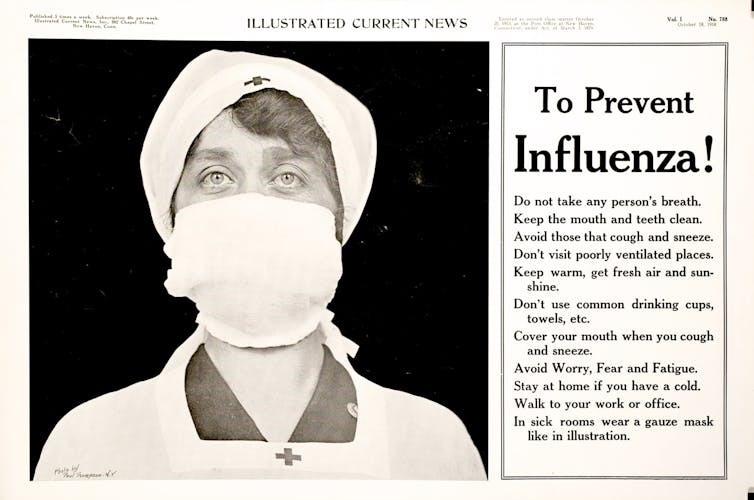
I’ve researched the history of the 1918 pandemic extensively. At that time, with no effective vaccine or drug therapies, communities across the country instituted a host of public health measures to slow the spread of a deadly influenza epidemic: They closed schools and businesses, banned public gatherings and isolated and quarantined those who were infected. Many communities recommended or required that citizens wear face masks in public – and this, not the onerous lockdowns, drew the most ire.
Why Londoners in the blitz accepted face masks to prevent infection – unlike today’s objectors
Why Londoners in the blitz accepted face masks to prevent infection – unlike today’s objectors: As COVID-19 spread in Britain, journalists and politicians took to comparing the pandemic to the blitz. From the “blitz spirit” to the death toll, the German bombing campaign in the second world war has become a go-to for evaluating Britain’s response to the current crisis.

But some historians have questioned the usefulness of blitz comparisons. Coronavirus does not reduce buildings to rubble. Sunny references to the “blitz spirit” conveniently overlook the looting that accompanied the blackouts. And though the death rates of the blitz and COVID-19 look roughly equal – the blitz saw deaths of around 43,000 while COVID-19 has killed nearly 45,000 – it’s unclear how this statistic is of much use. There is drama in this comparison, but not much substance.
An under-regarded but critical player in this comparison is the humble mask, an object that helps to show not how similar our moment is to the blitz, but how divorced. Mask-wearing was, in 1941, a completely uncontentious and even patriotic activity.
Sexual contact carries some risk for exposure to infection
Sexual Health in the SARS-CoV-2 Era: Sexual contact carries some risk for exposure to infection with severe acute respiratory syndrome coronavirus 2 during the coronavirus disease 2019 pandemic. This commentary provides clinicians with guidance on how to address sexual health and activity with patients in this context.
Remember the Pandemic’s Heroes?
Will Society Remember the Pandemic’s Heroes? If history is any guide, probably not.
Subscrever:
Mensagens (Atom)

-
StayAway Covid: após 38 mil casos, foram gerados apenas 730 códigos de infectados : Entre dois milhões de downloads e mais de 38 mil doe...
-
The Tricky Math of COVID-19 Herd Immunity : Herd immunity differs from place to place, and many factors influence how it’s calculated.
-
Moderna Announces Longer Shelf Life for its COVID-19 Vaccine Candidate at Refrigerated Temperatures : Vaccine candidate now expected to rem...

